Silfab Opponents File Petition with the US Supreme Court for Relief Against South Carolina’s Judicial System for Non-Action.

Silfab Opponents File Petition with the US Supreme Court for Relief Against South Carolina’s Judicial System for Non-Action.

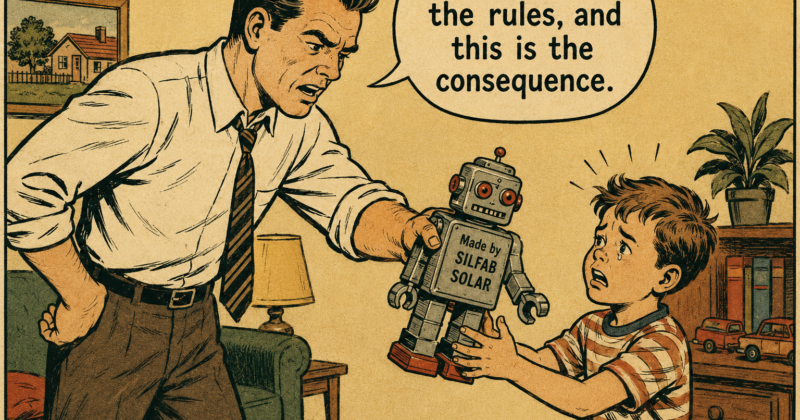
In May 2024, the York County BZA voted unanimously against solar cell manufacturing as not an approved use in a light industrial zone. In Jan 21, 2026, Bivins v. York County suit was dismissed and ruled the adjacent landowner, Bivins, has no standing although law clearly states legal standing should Bivins claim he “may” be damaged. The residents of Fort Mill, SC have been engaged in a costly battle against every level of our state's judicial system. The legal maneuvering from the county, circuit and supreme courts over the past 2 1/2 years is staggering. In the fall of last year, SC Attorney General issued a statement that York County had authority to revoke the construction permitting. Regardless how the public fought using the zoning rules as their basis, the judges and courts at every turn allowed time to pass and the factory to open. In Feb 13, 2026, a Certificate of Occupancy (CO) for Building A is issued. On March 2, 2026, within...
Read More
Commemorating the 250th Anniversary of the Commencement of Construction of Fort Sullivan and the Adoption of South Carolina’s First Constitution on March 26, 1776. 

Commemorating the 250th Anniversary of the Commencement of Construction of Fort Sullivan and the Adoption of South Carolina’s First Constitution on March 26, 1776. 

SC Public Interest Foundation Chairman, Mr. Vince Graham,  reminds us of the importance of our state’s struggle to stop tyranny in sharing the following comment and historical writing.  “The spirit of constitutional seriousness and long-term responsibility lies at the heart of the SC Public Interest Foundation’s work”   In early March 1776, acting through the revolutionary government of South Carolina’s Provincial Congress and Council of Safety, orders were issued directing Colonel William Moultrie to proceed immediately to Sullivan’s Island and begin construction of Fort Sullivan. Later that month, upon adoption of the Constitution on March 26, 1776, John Rutledge was elected President of a newly founded republic. South Carolina’s Constitution was among the earliest written in the modern world. It established a functioning government exactly 100 days before July 4th. Speed was paramount; permanence was secondary. With the British navy – then the most powerful in the world – bearing down upon them, South Carolinians did not await authorization from the Continental Congress assembled...
Read More
Why Is There Now a Windsock Atop the Silfab Facility?

Why Is There Now a Windsock Atop the Silfab Facility?

Written by Timothy J. Hegarty, A Concerned Citizen of York County: As the title indicates, a new feature now adorns the northeast corner of the Silfab Manufacturing Facility just above their logo. This simple feature is a red conical tube designed to indicate wind direction and relative speed and is commonly referred to as a windsock. This windsock made its debut appearance on or about April 1, 2026. You are probably familiar with them having seen them at airports and heliports to assist pilots with landings and take-offs. But there are no landings or take-offs occurring at the Silfab facility so why do they now have a windsock? A less familiar, but equally vital, use for a windsock is in an industrial safety role. Industrial windsocks are critical, regulation compliant (OHS/HSE Occupational Health and Safety and Health, Safety and Environment) safety tools used at chemical plants, refineries and industrial manufacturing sites to immediately identify wind direction and speed during hazardous gas releases and...
Read More
South Carolina’s Financial Reform Deadline Has Passed, Here’s Where Things Actually Stand

South Carolina’s Financial Reform Deadline Has Passed, Here’s Where Things Actually Stand

A final compliance report confirms significant progress, but several key reforms remain unfinished months after lawmakers and citizens expected them to be done. South Carolina legislators gave state agencies a firm deadline: March 7, 2026. By that date, every recommendation that did not require a change in law from a sweeping forensic accounting review of the state's finances was supposed to be fully implemented. The SC Public Interest Foundation had been tracking that deadline closely, and in a February 2026 article laid out the stakes clearly. Now, with a final compliance report from Forvis Mazars dated March 9, 2026, there is an official accounting of where things stand. The picture is better than a worst-case scenario but far short of the finish line the law required. To understand why this matters, some background is necessary. Starting in 2012, a mapping error inside the state's accounting software, combined with poor internal quality controls withing the Comptroller’s Office,  quietly excluded or double-counted certain cash...
Read More
Who Protects the Children from Silfab Solar?

Who Protects the Children from Silfab Solar?

Written by Timothy J. Hegarty, A Concerned Citizen of York County: By now, it is abundantly clear that SCDES, also known as the SC Department of Environmental Services, would be more appropriately named if referred to as the SC Department of Economic Services as you will come to realize reading this article. Admittedly, the article is a little long but it clearly spells out why the Silfab issue in Fort Mill clearly underscores the impact to citizens when the top environmental regulatory agency in the state restructures to support economic competitiveness over its core environmental responsibilities. The recently issued Compliance Agreement between SCDES and Silfab Solar is an excellent example. The document is dated March 16, 2026, and is intended to allow Silfab to potentially return to the manufacture and production of solar cells and modules following a verified discharge of Potassium Hydroxide and what is described as a drip of Hydrofluoric Acid.  These are the issues I have noted as significantly concerning in this document: Page...
Read More
Chemical Spills, Schools Closed, Citizen Suit Finally Gets Court Date after Waiting Two Years, AG Wilson Demands Answers from York County Officials

Chemical Spills, Schools Closed, Citizen Suit Finally Gets Court Date after Waiting Two Years, AG Wilson Demands Answers from York County Officials

Chemical Spills Bring Crisis to the Community’s Doorstep One must question whether the Attorney General’s immediate inquiry and the release of the date for Silfab’s BZA appeal take on added urgency in light of the events that unfolded at the Silfab facility in the first week of March 2026. On March 3, 2026, a spill of potassium hydroxide prompted a HAZMAT response and drew immediate scrutiny from state regulators. Two days later, a second spill, this time involving hydrofluoric acid, a highly corrosive substance, caused Flint Hill Elementary School, located less than 1,000 feet from the plant, to close and bus students to another facility. The South Carolina Department of Environmental Services (SCDES) responded by ordering Silfab to immediately cease all operations pending a joint investigation with the U.S. Environmental Protection Agency. Operations partially resumed on March 9 after SCDES and EPA completed their on-site assessment, though Silfab was required to enter a Compliance Agreement and may not restart chemical manufacturing processes until...
Read More
Lawsuit Challenges Governor’s Authority to Deploy National Guard Beyond State Borders

Lawsuit Challenges Governor’s Authority to Deploy National Guard Beyond State Borders

South Carolina Governor Faces Legal Challenge Over National Guard Deployment to Washington, D.C. The South Carolina Public Interest Foundation and a Navy veteran have filed a lawsuit in South Carolina’s Supreme Court challenging Governor Henry McMaster’s deployment of National Guard troops to Washington, D.C., arguing the move exceeds his legal authority under state law. The complaint, filed on January 7, 2026, seeks to block McMaster’s second deployment of South Carolina guardsmen to the nation’s capital which saw 300 troops sent to D.C. in late November 2025. The plaintiffs argue that state law strictly limits when and where the governor can deploy the National Guard, and that the current deployment violates those restrictions. The Deployment in Question Governor McMaster first authorized the deployment of 200 South Carolina National Guardsmen to Washington D.C., in August 2025, responding to President Trump’s executive order declaring a “crime emergency” in D.C. That initial deployment lasted over a month before ending in late September. On November 26, 2025, McMaster announced via...
Read More
Countdown to the Deadline for Financial Accountability in SC is March 7, 2026

Countdown to the Deadline for Financial Accountability in SC is March 7, 2026

On January 6th, the SC Public Interest Foundation wrote a an article outlining events that highlighted problems with the state’s finance and accounting practices from 2012 to the present. These included accusations of lost funds, leading to the resignation of the state’s Comptroller General and a Senate trial of the state’s Treasurer. As reported in the article, the investigation was plagued by accusations and allegations, which undermined citizens' trust in their state government’s financial transparency. The article concluded, “The silver lining is the General Assembly engaged The AlixPartners, an internationally recognized financial accounting firm, to review all aspects of the state’s financial reporting procedures and to provide a report with recommendations. Their report, released on January 15, 2025, identified twenty-five recommendations: twenty of which are specific to the Comptroller General’s Office, one recommendation specific to the State Treasurer’s Office, and three combined to the State Auditor, Treasurer, and Comptroller General. The General Assembly then directed the Governor and the agencies to...
Read More
Greenville County Biennial Budget Lawsuit Update

Greenville County Biennial Budget Lawsuit Update

The South Carolina Public Interest Foundation have alleged constitutional violations by the Greenville County Council, with regard to its recently-adopted biennial budget and tax increase. This suit is ongoing and on February 20, 2026, Fox News Carolinas covered the story and important recent updates. Watch their coverage of SCPIF's lawsuit against Greenville County Council in the video below https://www.youtube.com/watch?v=UegJTs51jm0 FOX Carolina News. (2026, February 20). Greenville Co lawsuit challenges budget process, taxpayer funds. https://www.youtube.com/watch?v=UegJTs51jm0...
Read More
A Practical Solution to South Carolina’s Zero-Based Budgeting Crisis: The Hybrid Approach

A Practical Solution to South Carolina’s Zero-Based Budgeting Crisis: The Hybrid Approach

The Reality of Non-Compliance Since 1979, South Carolina law has required state agencies to practice zero-based budgeting (ZBB), justifying every dollar they spend from scratch each year. Section 2-7-65 of the South Carolina Code explicitly states that “each state agency, department, or institution shall be required to justify its recurring expenses, as well as any new or additional expenses.”(S.C. Code Section 2-7-65) This wasn’t merely a suggestion; it was a law designed to prevent unchecked spending growth and protect taxpayer dollars. Since 2011, elected officials have largely abandoned this statutory requirement, reverting to “incremental budgeting” under Governor Nikki Hailey, which only scrutinizes new spending. The consequences have been dramatic. South Carolina’s total state spending has surged from approximately $2 billion in FY 1979-80 to $5.1 Billion in General Fund spending in 2011, to $12.4 billion by FY 2025, thus representing a compounded annual growth rate far exceeding 5% when adjusted for inflation and population. (Data compiled from South Carolina Revenue and Fiscal...
Read More