
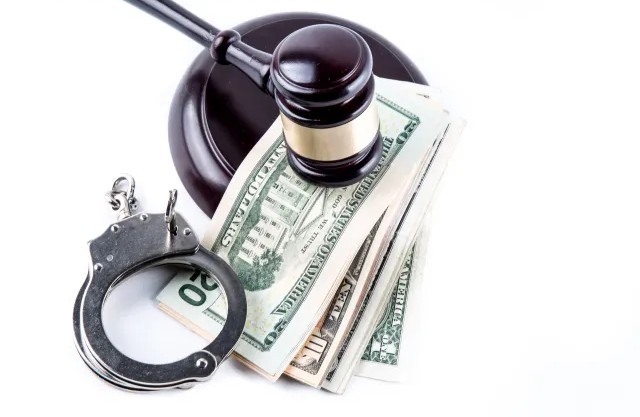
Asset forfeiture lets the government permanently take property tied to a crime, and in most of the country, it can do so without ever convicting the owner. That gap between punishment and proof drives nearly every legal challenge to the practice. In 2023 alone, 45 states collected nearly $300 million through forfeiture, and the federal government collected $4.5 billion, according to the Institute for Justice’s Policing for Profit. Gerhard, R., & Gerhard, R. (2026, October 20). Policing for Profit 4. Institute for Justice.
Civil v. Criminal Forfeiture and the Federal Framework
The difference between Civil and Criminal asset forfeiture is who is on trial. Criminal forfeiture is an action against a criminal defendant, imposed as part of the sentence after a conviction. Civil forfeiture is an action against the property itself, which is why the cases carry captions like United States v. $35,000 in U.S. Currency. Because the property is the “defendant,” the owner’s guilt is legally beside the point.
In-Depth Criminal Forfeiture
Under 21 U.S.C. § 853 and 18 U.S.C. § 982, a convicted defendant forfeits proceeds of the offense and property used to commit it. If tainted property is gone, the court may order forfeiture of “substitute assets,”§ 853(p). A third party will file a petition in a post-verdict “ancillary proceeding” (§ 853(n)). In Libretti v. United States, the Supreme Court held that criminal forfeiture is part of the sentence, not a separate offense, so no jury finding is constitutionally required. Id. 516 U.S. 29 , 38-39, S.Ct. 356, 363, 133 L.Ed.2d 271 (1995).
In-Depth Civil Forfeiture and CAFRA.
The Civil Asset Forfeiture Reform Act (CAFRA) set the modern federal rules. The government must prove by a preponderance of the evidence that property is subject to forfeiture, and, for “facilitating” property, a “substantial connection” to the offense (18 U.S.C. § 983(c)). CAFRA created a uniform innocent owner defense, but the owner bears the burden of proving it (§ 983(d)). It also allows hardship release of seized property (§ 983(f)) and attorney fees when a claimant “substantially prevails”(28 U.S.C. § 2465(b)).
Most federal forfeitures never see a judge. If no one files a timely claim, the seizing agency forfeits the property administratively. From 2000 to 2023, 71% of DOJ forfeitures that generated revenue were administrative, 12% civil-judicial, and just 17% criminal (Policing for Profit, p. 50). Federal law also lets state and local police hand seized property to federal agencies and receive up to 80% of the proceeds (21 U.S.C. § 881(e); 18 U.S.C. § 981(e)). This allows agencies to forfeit under federal standards even when state law is stricter.
South Carolina’s Forfeiture Framework
South Carolina forfeits property mainly through a civil process, and it requires no criminal conviction. The core provisions are S.C. Code §§ 44-53-520 (what may be seized), 44-53-530 (procedure and proceeds), and 44-53-586 (innocent owners). The state has a general criminal forfeiture statute comparable to 21 U.S.C. § 853, and it does not report whether it processes forfeitures civilly or criminally (Policing for Profit, p. 161).
What Can be Taken: Section 44-53-520 reaches drugs and equipment, vehicles, real and personal property “knowingly used to facilitate” drug crimes, proceeds, and any money seized near drugs or “at the time of an arrest or search” involving a violation. Vehicles are forfeitable only above drug-quantity thresholds (for example, one pound of marijuana, ten grams of cocaine). Police may seize without a warrant if they have probable cause to believe that the property was used in a violation (§ 44-53-520(b)).
Procedure: Under § 44-53-530, the solicitor or Attorney General petitions the Court of Common Pleas “within a reasonable time period following.” No firmer deadline exists beyond the two-year statute of limitations. The owner has 30 days to answer, and missing the deadline results in default forfeiture without a hearing.
Burden of Proof
The government needs only to show probable cause to seize the property. The burden then shifts to the owner to prove by a preponderance of the evidence that the property is not forfeitable (§§ 44-53-520(b), -586(b); Pope v. Gordon, 369 S. C. 469, 633 S.E.2d 148, 151 (S.C. 2006)). Innocent owners under § 44-53-586 must likewise prove they did not consent to, take part in, or know of the illegal use.
Who Keeps the Money?
Proceeds are split 75% to the seizing law enforcement agency, 20% to the prosecutor, and 5% to the state general fund (§ 44-53-530(f)).
The Institute for Justice gives South Carolina a D- for forfeiture, an F for innocent owner protections, and a 95% profit incentive. From 2000 to 2023, the state took in at least $231 million in state and federal forfeiture revenue, including about $120 million through federal equitable sharing. About 40% of the state’s agencies were certified for that program from 2019 to 2023. South Carolina has enacted no recent reforms (Policing for Profit, pp. 160–161).
Most of the human data comes from journalists. Relying on a Greenville News investigation, the South Carolina Advisory Committee to the U.S. Commission on Civil Rights reported that nearly half of people whose property was seized from 2014 to 2016 were never convicted, and about 20% were never charged (USCCR advisory report, 2022).
Federal Legal Issues and Case Law
The Supreme Court has never struck down civil forfeiture as such, but it has limited it through the Due Process and Excessive Fines Clauses. Bennis v. Michigan held that due process does not require an innocent owner defense, upholding forfeiture of a wife’s car after her husband used it with a sex worker, Id., 516 U.S. 442, 116 S.Ct. 994, 134 L.Ed.2d 68 (1995), and then Congress responded with CAFRA. United States v. James Daniel Good Real Property requires notice and a hearing before real property is seized Id., 510 U.S. 43, 114 S.Ct. 492, 126 L.Ed.2d 490, 62 USLW 4013 (1993). But Culley v. Marshall, 601 U.S. 377, 144 S.Ct. 1142, 218 L.Ed.2d 372 (2024), held that owners of seized cars are owed only a timely forfeiture hearing, not a separate preliminary one. Concurring, Justices Gorsuch and Thomas questioned whether modern civil forfeiture “can be squared with the Constitution’s promise of due process.”
Excessive Fines and Double Jeopardy
Austin v. United States, 509 U.S. 602, 113 S.Ct. 2801, 125 L.Ed.2d 488 (1993), held that civil forfeiture is partly punitive and thus subject to the Excessive Fines Clause. United States v. Bajakajian, 524 U.S. 321, 118 S.Ct. 2028, 141 L.Ed.2d 314 (1998),bars forfeitures “grossly disproportional” to the offense, and Timbs v. Indiana, 586 U.S. 146, 139 S.Ct. 682, 203 L.Ed.2d 11 (2019) applied that limit to the states. Yet United States v. Ursery, 518 U.S. 267, 116 S.Ct. 2135, 135 L.Ed.2d 549 (1996) held that civil forfeiture is not punishment for double jeopardy purposes, a tension the Court has not resolved.
Criminal Forfeiture and Profit Incentives
Criminal forfeiture’s main constitutional issue is pretrial asset freeze. The government may freeze tainted assets that a defendant needs to hire a lawyer, Caplin & Drysdale v. United States, 491 U.S. 617, 109 S. Ct. 2646, 105 L.Ed.2d 528 (1989), but not untainted ones (Luis v. United States, 578 U.S. 5, 136 S.Ct. 1083, 194 L.Ed.2d 256 (2016)). Separately, lower courts have begun treating agencies’ financial stakes as a due process problem. Harjo v. City of Albuquerque, 326 F.Supp.3d 1145 (D.N.M. 2018),struck down a vehicle forfeiture program because the officials running it could spend its proceeds.
South Carolina Legal issues and Case law
South Carolina’s courts have upheld the forfeiture statutes while inviting the legislature to change them. In 2017, police in Horry County seized nearly $20,000 from a defendant. In 2019, Circuit Judge Steven H. John ruled that the statutes violated due process and the Excessive Fines Clause under both the state and federal constitutions (Post and Courier).
On September 14, 2022, the South Carolina Supreme Court in Richardson ex rel. Fifteenth Circuit Drug Enforcement Unit v. $20,771.00 in U.S. Currency, 437 S.C. 290, 878 S.E.2d 868 (2022)reversed and held that the challenge did not overcome the presumption of constitutionality and remanded for a jury trial (Institute for Justice). The court said reform belongs to the General Assembly, noting that “legislative alteration might be a good thing.” It did, however, add the Timbs and Bajakian “grossly disproportionate” inquiry to the state’s proportionality test. Chief Justice Donald Beatty dissented on due process, arguing that the scheme “places an undue burden on property owners, many of whom are never charged with a crime, to prove they are not guilty.”
The legislature has not acted. H. 3619, which would have required a conviction, died in 2022, and the only pending bill, S. 726, merely adjusts a fentanyl threshold for vehicle forfeitures. Owners’ remaining tools are as-applied excessive-fines challenges, due-process attacks on the owner’s burden, and an untested Harjo-style challenge to the 95% profit incentive.
Conclusion
Criminal forfeiture rests on a conviction and full trial protection, while civil forfeiture rests on the fiction that property can be guilty. Federal courts have narrowed that fiction, but the cases Bennis and Culley confirm that it remains constitutional as currently read. South Carolina sits at the permissive end, with no conviction requirement, a burden on owners, and 95% of proceeds going to law enforcement. Its Supreme Court has said the fix belongs to the General Assembly, which has yet to make it.